
Why A Laxative Detox Is Not A Detox
Most people who try a detox do not feel better.
They feel lighter for a moment.
Then drained.
Then bloated again.
Then confused about why nothing changed.
Many are told this discomfort means the detox is working. It does not.
Laxative detox is not detox. It is stimulation without removal. And in many cases, it makes the problem worse.
This page explains why. Not with hype. Not with scare tactics. With physiology, logic, and facts.
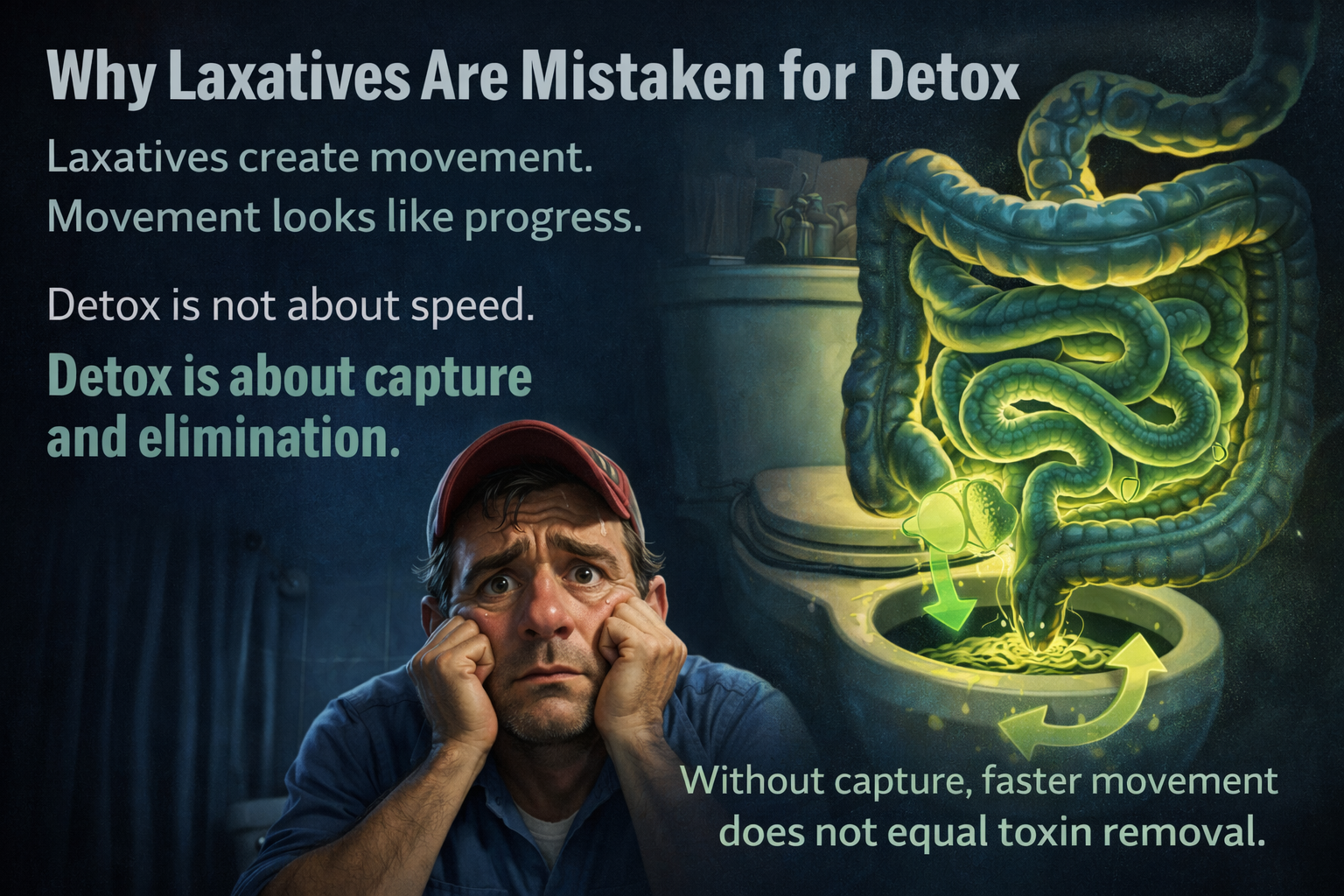
Why Laxatives Are Often Mistaken for Detox
Laxatives create movement.
Movement looks like progress.
When bowel movements increase, people assume toxins are leaving the body faster. That assumption feels intuitive, but it is biologically incomplete.
Here is the key misunderstanding:
Detox is not about speed.
Detox is about capture and elimination of toxins.
Without capture, faster movement does not equal toxin removal.
It often equals toxin recycling.
WHAT ACTUALLY HAPPENS DURING A LAXATIVE CLEANSE
The Digestive Reality Most Detox Programs Ignore
Your liver processes unwanted compounds and sends them into the digestive tract through bile.
That sounds like detox.
Until you understand what has to happen next.
The Core Misunderstanding
Movement is mistaken for removal.
Laxatives increase bowel movement frequency.
That creates the appearance of progress.
But detox is not measured by urgency.
It is measured by whether toxins are actually removed from the body.
What Happens Without Binding
When laxatives are used without binding support, this sequence commonly occurs:
1️⃣ Toxins are processed by the liver
2️⃣ Toxins enter the digestive tract
3️⃣ No binding agents are present
4️⃣ Unbound toxins are reabsorbed
This process is known as enterohepatic recirculation.
Instead of leaving the body, toxins are recycled back into circulation.
Why Symptoms Increase Instead of Resolve
When toxins from food, water, and airborne exposure are mobilized but not captured, the body experiences increased internal exposure. This is why many people report symptoms such as:
Headaches
Fatigue
Brain fog
Skin reactions
Digestive discomfort
The body is reacting to increased toxin movement, not successful detox.
The cleanse did something. It just did not complete the process.
Why This Feels Confusing
Laxative detox creates immediate sensations.
Those sensations are often interpreted as effectiveness. But urgency is not detox. Discomfort is not progress. And diarrhea is not toxin removal. You are being dehydrated, depleted, and deceived.
The Key Takeaway
Without binding, faster movement does not mean fewer toxins.
It often means greater reabsorption.
Which is why laxative detox rarely delivers lasting results.
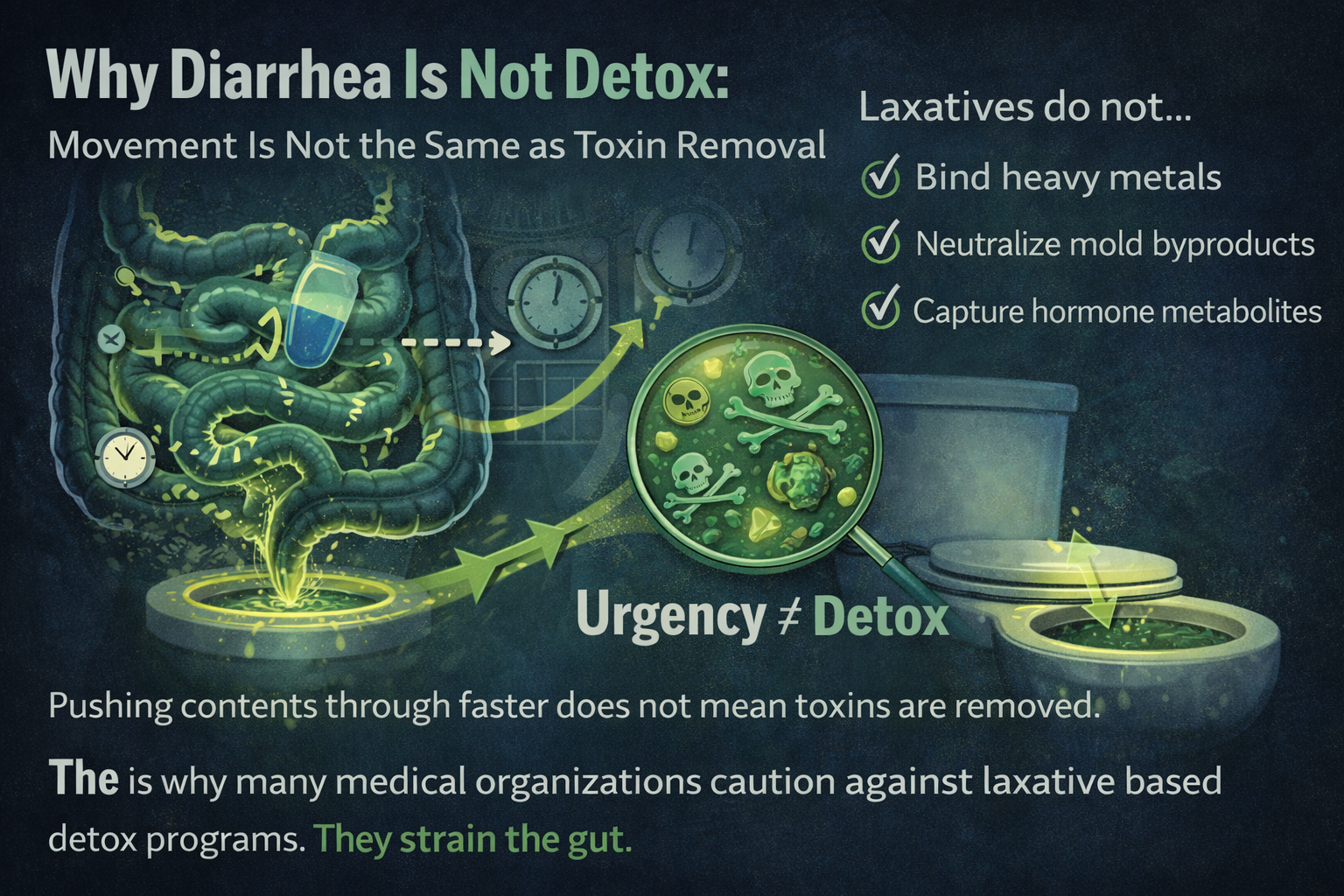
Movement Is Not the Same as Toxin Removal
Laxatives increase water secretion and muscle contractions in the intestines, which creates urgency and frequent bowel movements.
That urgency is often mistaken for detox.
But bowel movement frequency does not determine whether toxins are actually removed from the body.
Laxatives do not bind heavy metals, mold byproducts, or hormone metabolites.
They do not selectively capture toxins once they enter the digestive tract.
Instead, they push contents through faster without addressing what happens to toxins along the way.
This is why many medical organizations caution against laxative based detox programs.
They strain the gut, disrupt electrolyte balance, and create false signals of progress without completing detox.
THE REABSORPTION PROBLEM
Why Detox Shortcuts Backfire
When toxins are released but not bound, the body does not simply discard them.
The digestive tract is designed to reabsorb compounds that pass through it. This includes nutrients, bile acids, and anything else that has not been physically captured.
The Reason You Feel Worse
Unbound toxins often follow the same path.
Instead of leaving the body, they are reabsorbed back into circulation.
This process is known as toxin recirculation, and it is one of the most common reasons people feel worse after a cleanse.
What looks like detox on the surface often becomes a loop underneath.
Here's What Happens
Toxins are mobilized.
They are flushed too quickly.
They are reabsorbed.
Symptoms increase.
Repeating A Toxic Cycle
Each cycle adds stress to detox organs instead of reducing the overall burden.
This is why many people find themselves repeating cleanse after cleanse.
Always trying again.
Never feeling restored.
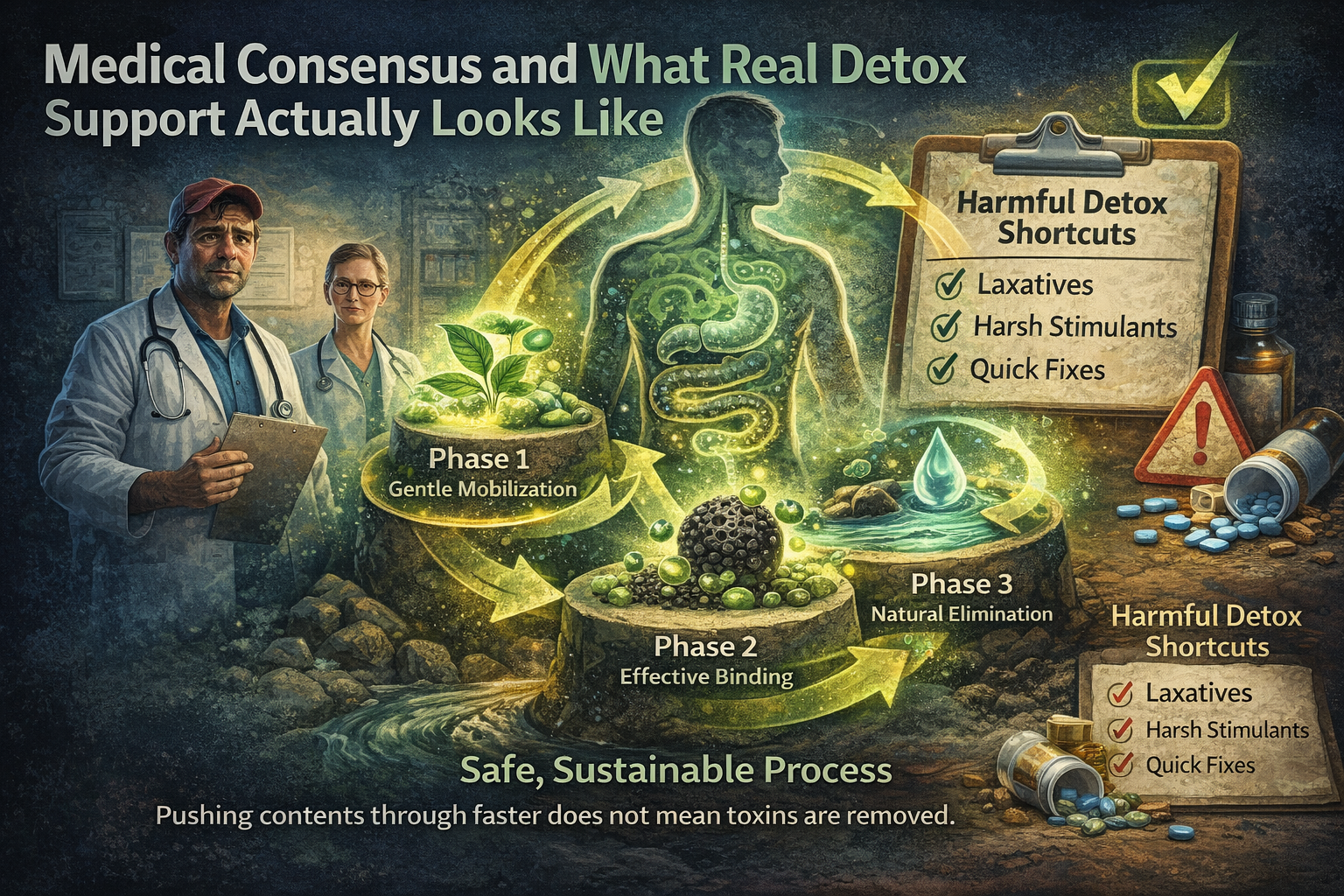
MEDICAL CONSENSUS AND WHAT REAL DETOX SUPPORT ACTUALLY LOOKS LIKE
Why Most Medical Experts Criticize Detox Programs
Mainstream medical criticism of detox programs focuses on a specific problem.
The human body already detoxes every day through the liver, kidneys, lungs, digestive system, and immune pathways.
These systems are designed to work continuously, not on a short cycle or emergency basis.
When external detox methods interfere with these natural processes instead of supporting them, symptoms increase rather than resolve.
This is why many medical organizations warn against aggressive or laxative based detox programs.
The Real Issue With Laxative Based Cleanses
Laxative detox programs are criticized because they create activity without effectiveness.
They increase irritation without actually removing toxins.
They disrupt normal digestion and fluid balance.
They create false signals of success through urgency and discomfort.
Most importantly, they ignore the balance between toxin binding and elimination.
This does not mean all detox support is harmful.
It means shortcuts are.
How the Body Is Designed to Detox Safely
The body does not detox through force.
It detoxes through coordination.
First, unwanted compounds are processed and mobilized.
Next, those compounds must be physically captured so they cannot be reabsorbed.
Finally, they are eliminated through natural pathways at a steady pace.
When these steps are respected, detox becomes manageable and sustainable.
What Real Detox Support Looks Like in Practice
Effective detox support follows a steady three phase process that mirrors how the body actually works.
Phase one focuses on gentle mobilization without overstimulation.
Phase two emphasizes binding so toxins are physically captured in the digestive tract.
Phase three supports elimination without forcing urgency or irritation.
This approach aligns with physiology instead of fighting it.
No shock.
No crash.
No false intensity.
Just consistent support the body can handle every day.
PUTTING IT ALL TOGETHER
Now you know the real issue with laxative based cleanses.
They create movement, but they do not complete detox.
If detox support does not include binding and steady elimination, many people end up in the same loop.
Try something. Feel worse. Try another shortcut. Repeat.
A complete three phase approach is different.
It supports detox the way the body actually works, day after day, without forcing urgency or stressing digestion.
If you want to see what that looks like in a real world, organic supplement, and how it compares to many popular detox products on the market, the breakdown below walks through it step by step.
Compare Detoxanation to other detox supplements

THE COST OF SHORTCUTS AND THE COST OF WAITING
Why Detox Shortcuts Feel So Tempting
Shortcuts feel appealing when energy is low and frustration is high.
When people feel bloated, foggy, run down, or uncomfortable in their own bodies, fast detox solutions look like relief. Laxative cleanses and aggressive detox programs promise results through urgency and intensity.
They create movement. They create discomfort. They create the feeling that something is finally happening. But movement is not detox. And urgency is not progress.
What Repeated Detox Shortcuts Actually Cost
The cost of repeated laxative detox cycles adds up over time.
Digestive irritation becomes more frequent. Gut resilience weakens instead of strengthening. Electrolyte balance becomes harder to maintain. Recovery takes longer after each attempt.
Many people unknowingly develop dependence on stimulants, laxatives, or extreme detox protocols just to feel functional again. What starts as a short term fix quietly becomes a long term problem.
When Detox Turns Into a Cycle Instead of a Solution
This is how many people get stuck.
They try a cleanse. They feel worse. They wait it out. They try another shortcut.
Each round takes more out of the system than it gives back.
Over time, detox stops feeling hopeful and starts feeling discouraging.
The Hidden Cost Most People Do Not Notice
More damaging than the physical effects is what happens mentally.
Shortcuts erode trust. Trust in the body’s ability to recover. Trust in supplements and support systems. Trust that feeling better is possible without extremes.
Once that trust is gone, people stop looking for real solutions and start settling for survival.
That loss of confidence keeps people stuck longer than any toxin ever could.
The Cost of Waiting Feels Smaller, But Is Not
Waiting has a cost too.
Many people delay proper detox support because life feels uncertain. Work is demanding. Finances are tight. The future feels unpredictable. Health becomes something to deal with later.
Later often arrives with more fatigue, not less. More inflammation, not relief.
Greater dependence on caffeine and stimulants just to get through the day.
Why Resilience Matters More in Uncertain Times
As stress increases, resilience decreases.
When resilience drops, everything else becomes harder. Energy becomes limited. Clarity becomes inconsistent. Recovery takes longer. In unstable times, physical resilience is not optional.
Energy is leverage. Clarity is stability.
Health is independence.
What Real Detox Support Requires
Detox does not require extremes.
It does not require forcing the body, flushing systems, or chasing discomfort in the name of progress.
It requires understanding how detox actually works and supporting it the right way.
A complete three phase approach focuses on gentle mobilization, effective binding, and steady elimination. Not for a few days. Not as a seasonal reset. But as consistent daily support the body can handle long term.
FAQ: FREQUENTLY ASKED QUESTIONS ABOUT LAXATIVE DETOX AND CLEANSING
Do laxatives remove toxins from the body?
No. Laxatives do not remove toxins from the body.
Laxatives work by drawing water into the intestines, increasing stool volume, or stimulating intestinal muscles to trigger a bowel movement. They are designed to relieve constipation, not to bind, neutralize, or eliminate toxins.
The body’s primary detox organs are the liver and kidneys. Without toxin binding, laxatives may increase movement but do not complete the detox process. In many cases, unbound toxins are reabsorbed.
Do laxatives flush your system or clean out your colon?
No. Laxatives do not flush toxins or clean the colon.
They soften or move stool already present in the digestive tract. They do not scrape the intestinal walls, remove buildup, or cleanse stored waste.
Claims that laxatives “flush out” toxins are not supported by scientific evidence.
Is a laxative the same as a detox or cleanse?
No. A laxative is not the same as a detox or a cleanse.
Laxatives are medications intended for short term constipation relief. Detox and cleanse programs often misuse laxatives to create urgency and discomfort that feels like progress.
This confusion leads many people to mistake bowel movement frequency for detoxification, even though toxin removal has not occurred.
Does diarrhea mean detox is working?
No. Diarrhea is not a sign that detox is working.
Diarrhea is a stress response that occurs when the intestines move too quickly or draw in excess water. While it can help expel pathogens during acute illness, it is not a safe or effective detox strategy.
Frequent diarrhea can lead to dehydration, mineral loss, gut irritation, and disrupted digestion.
Why do people feel worse after a laxative cleanse?
Many people feel worse because toxins are mobilized but not captured.
When toxins are released into the digestive tract without binding support, they can be reabsorbed back into circulation. This increases systemic exposure rather than reducing it.
Common symptoms include headaches, fatigue, brain fog, digestive upset, skin reactions, and flu like sensations.
These symptoms are not proof of detox success. They are signs of incomplete detox.
Can laxatives damage digestion or gut health?
Yes. Frequent or repeated laxative use can negatively impact digestion.
Long term use may irritate the gut lining, disrupt electrolyte balance, weaken normal bowel function, and reduce microbial diversity. Over time, this can create dependency and make natural digestion less efficient.
This is why medical organizations caution against using laxatives as a detox method.
What is a safer way to support detox naturally?
Safer detox support focuses on supporting the body’s existing systems rather than forcing urgency.
This includes adequate hydration, fiber intake, balanced nutrition, sleep, and gentle support for detox pathways. Effective detox support also includes binding so toxins are captured and eliminated rather than recycled.
The goal is steady, sustainable support, not short term extremes.
How long does detox take?
Detox is not a one time event.
The body detoxes every day. Support should be consistent and manageable rather than aggressive or seasonal. Short cleanses may create sensations, but long term support is what builds resilience.
Is it harmful to take a laxative daily?
Daily laxative use without medical supervision can be harmful.
It may lead to dehydration, electrolyte imbalances, weakened bowel function, and dependency. Laxatives are intended for occasional use, not ongoing detox support.
What actually comes out during a colon cleanse or laxative detox?
Primarily stool and water.
Claims of toxins, parasites, or long stored waste being flushed out are often misinterpretations of normal digestive contents, mucus, or reactions to irritation.
True toxin removal depends on binding and elimination, not urgency.
What is the healthiest way to support full body detox?
The healthiest approach supports the body’s natural detox systems without overwhelming them.
This includes proper hydration, whole foods, fiber, adequate sleep, stress management, and gentle detox support that includes mobilization, binding, and elimination.
Detox works best when it is steady, not extreme.
Detox is not about flushing the body.
It is about supporting the systems that already protect it.
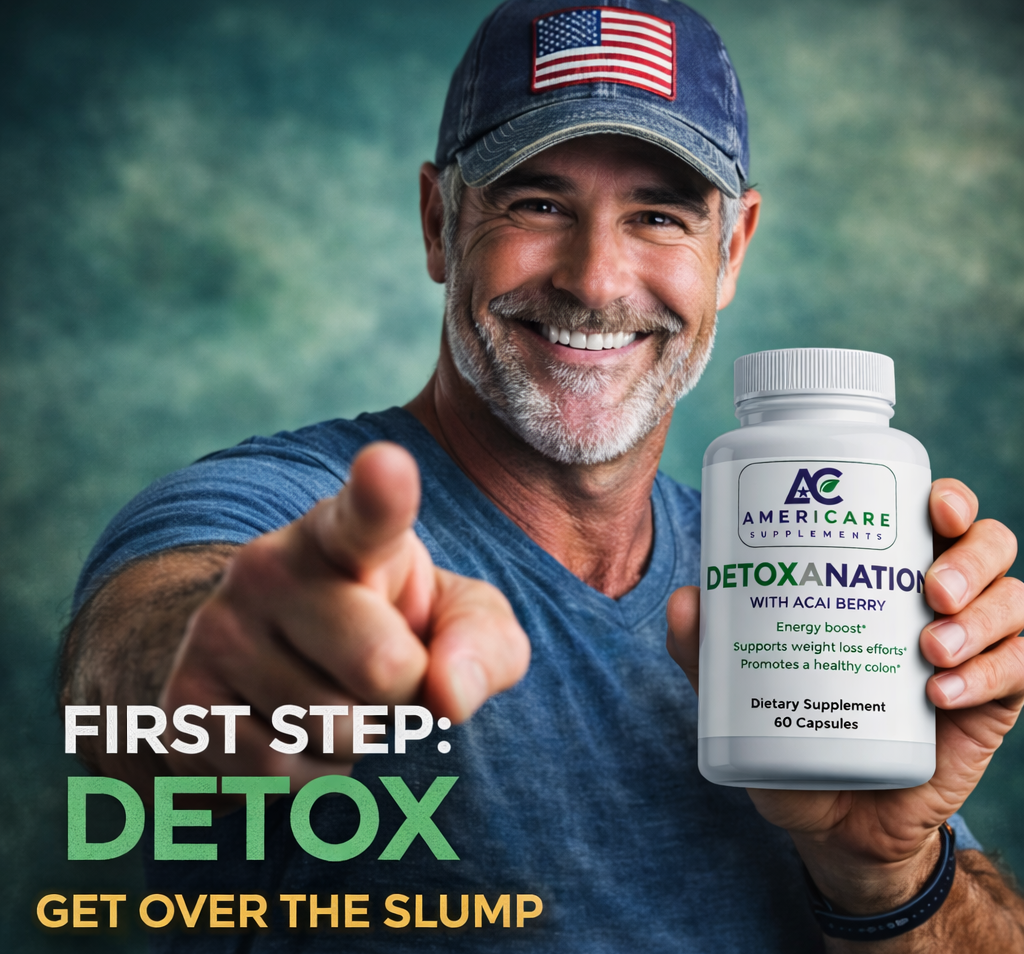
First Step: Detox
If you’ve made it this far, you now understand why so many detox supplements fail and what real detox support actually requires.
Most products focus on one piece of the process and ignore the rest.
That is why results feel inconsistent and why people often cycle through product after product without lasting improvement.
Some people choose to apply this knowledge through diet, hydration, and lifestyle changes alone. Others look for additional support that aligns with how the body actually detoxes day after day.
If you want to see how a daily detox supplement can be formulated around gentle mobilization, effective binding, and steady elimination without laxatives or harsh shortcuts, Discover Detoxanation With Acai Berry below.